Charting Quiet Shifts: How Layered Stats and Shared Toolkits Guide Traders Through Niche Exchange Volatility
Felix Lorenz · Aug 3, 2026
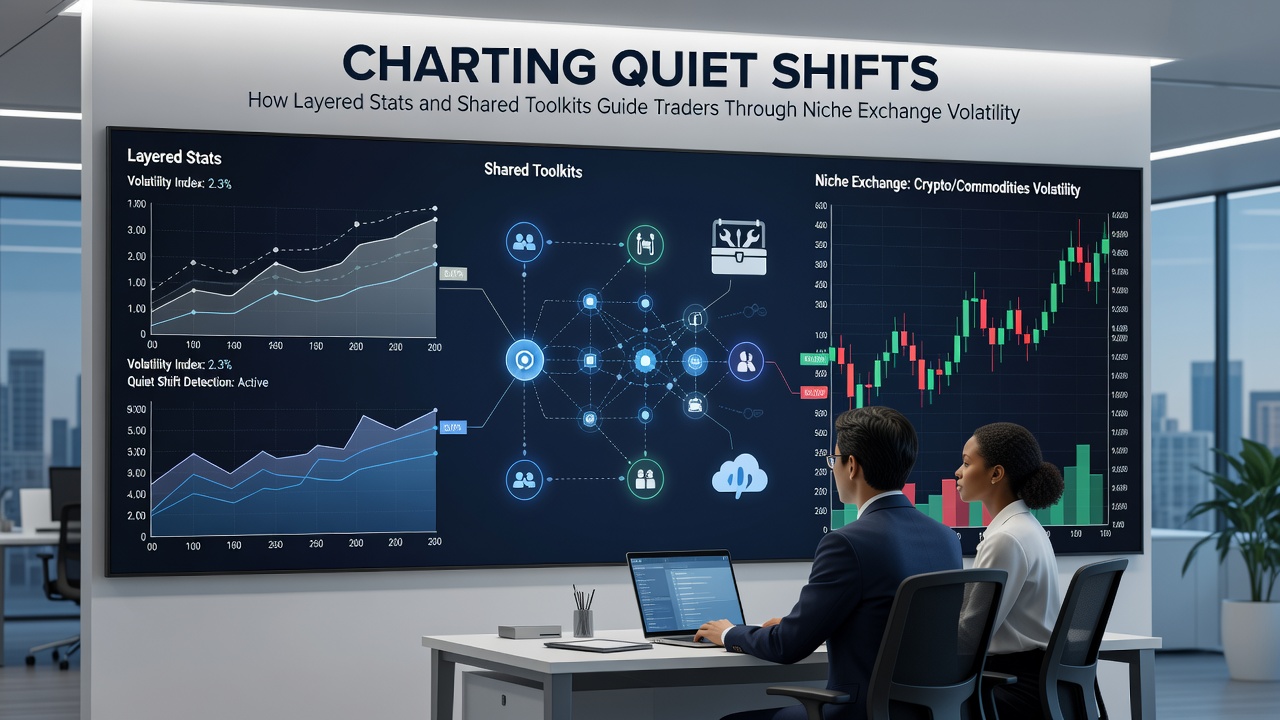
Charting Quiet Shifts: How Layered Stats and Shared Toolkits Guide Traders Through Niche Exchange Volatility
Traders active in niche exchange segments rely on layered statistical models that combine historical price action, order book depth, and volume-weighted indicators to detect subtle movements before broader markets react, and these approaches have gained traction as volatility persists across specialized betting contracts throughout 2026. In August 2026 several platforms recorded increased activity in low-liquidity event categories where standard price feeds often lag behind actual order flow.
Building Multi-Layer Data Frameworks
Participants construct frameworks that stack short-term momentum readings atop longer-term baseline metrics, allowing them to isolate genuine shifts from random noise, while shared toolkits supply standardized data pipelines that reduce the time required to ingest fresh feeds. Researchers at institutions tracking exchange behavior note that such stacking techniques help surface patterns in contracts tied to emerging sports leagues or regional competitions that lack the coverage of mainstream fixtures.
One common configuration pulls real-time tick data into visualization layers that overlay implied probability curves against historical settlement ranges, and traders then apply filters derived from community-maintained repositories to flag anomalies in tick velocity. Data from regulatory filings in multiple jurisdictions show that these filtered views correlate with tighter execution spreads during periods of elevated uncertainty.
Toolkits and Collaborative Repositories
Shared toolkits typically include modular scripts for order-book scraping, probability recalibration, and alert generation, with contributors updating code snippets as exchange APIs evolve. Observers note that repositories hosted on open platforms allow rapid dissemination of patches when new contract types appear, particularly in markets launched after regulatory adjustments in non-UK regions. According to figures released by iGaming Ontario, niche contract volumes rose steadily through mid-2026, prompting toolkit maintainers to prioritize compatibility with additional data fields.

Groups that maintain these resources often publish version logs documenting how specific modules improved signal-to-noise ratios during volatile stretches, and users report faster onboarding when documentation includes sample datasets drawn from prior event cycles. The European Gaming and Betting Association has published industry reports that reference similar collaborative practices as contributors to operational resilience across smaller exchanges.
Detecting Quiet Shifts in Practice
Quiet shifts manifest as incremental changes in implied odds that precede larger swings, and traders who monitor layered indicators can position ahead of those swings because the combined metrics highlight divergences between order flow and settlement probabilities. Studies from academic groups analyzing exchange datasets indicate that contracts in niche categories exhibit longer periods of low visibility before momentum builds, giving prepared participants an interval to adjust exposure.
Case examples drawn from platform archives demonstrate how one cohort of traders used a shared volatility scanner to identify a cluster of micro-movements in a regional tournament market during August 2026; the scanner combined live depth charts with rolling correlation scores, enabling coordinated responses without requiring constant manual oversight. Such coordination relies on standardized data formats that reduce interpretation errors across different user setups.
Integration with Broader Market Context
Layered approaches also incorporate external variables such as weather feeds for outdoor events or injury databases for player-specific contracts, and these additions sit alongside core price layers to refine edge calculations. Participants who integrate multiple sources find that toolkit updates frequently bundle new connector modules, allowing seamless addition of contextual data without rebuilding entire pipelines. Reports compiled by the Australian Communications and Media Authority track similar patterns of data enrichment among operators handling specialized betting products.
Because niche segments often operate with thinner order books, small changes in participation rates can amplify price movement, and the statistical layering helps distinguish participation-driven shifts from liquidity gaps. Community forums document instances where toolkit alerts triggered reviews of historical analogs, revealing repeatable sequences that informed subsequent positioning.
Conclusion
Layered statistics paired with shared toolkits supply structured methods for navigating volatility in niche exchange segments, and evidence from regulatory filings, industry reports, and platform activity logs points to sustained adoption of these techniques through 2026. As new contract types continue to appear, the emphasis on standardized data flows and modular analysis remains central to how participants process information and manage exposure across specialized markets.