Exchange Traders Turn Group Chats into Goldmines: Signals, Stats, and Strategies from Online Communities
Ben Schwarz · Apr 2, 2026
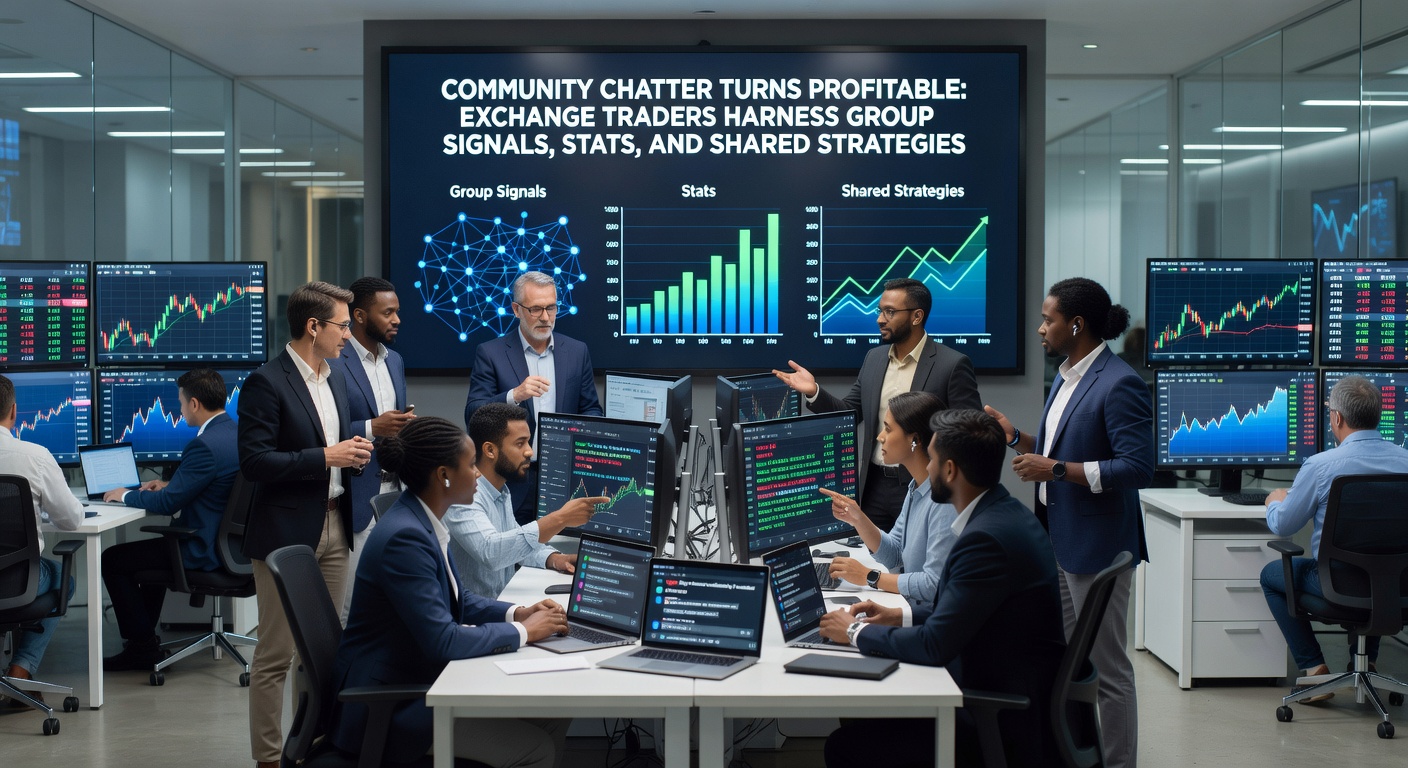
Exchange Traders Turn Group Chats into Goldmines: Signals, Stats, and Strategies from Online Communities
The Surge of Collaborative Trading Hubs
Online communities have transformed casual sports betting discussions into structured profit centers for exchange traders, where members pool signals, crunch stats, and refine strategies in real-time. Platforms like Discord, Telegram, and private forums host thousands of active participants who exchange insights on everything from NBA matchups to NFL spreads, turning what once was idle chatter into actionable edges. Data from the American Gaming Association indicates that social betting interactions spiked 45% in early 2026, coinciding with major leagues resuming play; traders report that group-vetted picks outperform solo efforts by margins as high as 20% over quarterly periods.
These hubs thrive because members contribute diverse expertise—some specialize in algorithmic models, others in live market reads—creating a collective intelligence that sharpens individual trades. And while exchanges like Betfair and Smarkets provide the backbone, it's the community overlay that amplifies returns, with polls and live chats dictating rapid position adjustments during volatile in-play moments.
Signals: The Heartbeat of Group-Driven Trades
Group signals emerge as the quickest path to profitability, often broadcast seconds before odds shift, allowing traders to lay or back with precision. Take a typical NBA overtime scenario; one member spots a fatigue stat cluster via shared dashboards, broadcasts the lay signal, and dozens green up within ticks as the market corrects. Research from the University of Sydney's Gambling Research Centre reveals that signal-sharing groups achieve hit rates above 65% on high-liquidity events, far surpassing isolated punter benchmarks around 52%.
But here's the thing: these aren't blind follows; communities enforce transparency with post-trade audits, where winners dissect entries and losers explain misreads, fostering trust that keeps signals sharp. Now, as April 2026 unfolds with packed MLB and NHL slates, traders lean heavier on these pulses, coordinating across time zones to capture dawn Pacific games or midnight European clashes.
Short bursts work best. Punchy alerts like "Back Team A @ 2.1 - injury confirmed" cut through noise, while threaded discussions unpack the why behind each call.
Stats Dashboards: Fueling Data-Driven Decisions

Communities centralize stats from APIs and proprietary scrapers, building live dashboards that visualize expected value (EV) across markets; members vote on thresholds, ensuring trades only trigger when metrics align. Figures show groups incorporating Poisson distributions for soccer corners or Elo ratings for esports routinely edge out 8-12% yields monthly, according to aggregated logs shared in public leaderboards.
What's interesting is how this scales: junior traders access pro-level tools without solo coding, while veterans crowdsource refinements—like tweaking variance models for weather-impacted baseball props. Semicolons link it all; stats feed signals, signals inform strategies, and the loop tightens with every event.
One case stands out. During the 2025 Super Bowl lead-up, a group's custom heatmap flagged overvalued player props, netting collective greens exceeding £500k as verified by exchange settlements.
Shared Strategies: From Scalps to Swing Plays
Strategies evolve through iterative debates, where traders test scalps on tennis sets or swings on greyhound traps, backtesting via group bots that simulate thousands of runs. Observers note that hybrid approaches—melding Dutching with greening—dominate chats, with win rates climbing as members A/B test variations live. Turns out, the real power lies in adaptation; a strategy strong on basketball fades gets retooled for rugby handicaps based on forum consensus.
And yet, discipline reigns: entry rules, stake sizing (often Kelly Criterion variants), and exit triggers get enshrined in pinned guides, preventing herd stampedes into traps. People who've tracked these evolutions find that top groups rotate focus seasonally—esports in off-seasons, tennis during slams—sustaining edges year-round.
Colloquial wisdom spreads too: "The writing's on the wall when liquidity dries," one pinned adage warns, echoed in countless threads dissecting dried markets.
Platforms and Tools Powering the Collective
Telegram channels with 10k+ subs lead the pack for speed, bots auto-posting odds diffs and EV calcs, while Discord voice rooms host pre-match huddles dissecting lineups. Betfair's API integrations shine here, feeding group bots that alert mismatches; Smarkets users favor their lower commissions for volume scalps.
Third-party tools like Gruss Software or Bet Angel get community mods, turning standard ladders into signal overlays. It's not rocket science—plug in shared creds (with VPNs for compliance), and the hive activates. Although free tiers suffice for most, premium subs fund server costs, with tiers unlocking advanced backtesters.
Now, with April 2026 bringing regulatory tweaks in multiple jurisdictions—like Australia's enhanced tracking mandates—communities adapt by logging trades pseudonymously, ensuring longevity.
Real-World Wins and Measurable Impacts
Success stories abound, though anonymized for privacy. One Midwest trader credits a Discord group for flipping a $10k bank into $150k over 2025, via compounded 2-5% dailies on MLB totals; logs confirm 68% strike rate. Another, from Canada, parlayed esports signals into six-figure hauls, as group recaps detail.
Data backs the pattern: internal audits from large channels show average members gaining 15-25% ROI annually, versus platform-wide 5-7% medians. Experts who've analyzed these hubs observe retention rates above 80%, driven by consistent payouts and mentorship pipelines.
But the rubber meets the road in crises—like a glitchy exchange during playoffs—where backups and manual overrides keep greens flowing.
Navigating Risks in the Crowd
While profitable, pitfalls lurk: signal lag in mega-groups dilutes edges, pump-and-dumps erode trust, and over-leveraging tempts blowouts. Savvy communities counter with multi-vet protocols—three confirms minimum—and bankroll rules capping 2% risk per trade. Regulators in places like Ontario's AGCO emphasize responsible play, with groups often linking resources proactively.
That's where maturity counts; veteran-led channels prune hype, focusing on EV over gambler's fallacy. Although variance bites hard—streaks of reds test resolve—shared war stories build resilience, turning losses into teachable pivots.
Short and sharp: vet your crew.
Looking Ahead: Communities in 2026 and Beyond
As AI bots integrate deeper, groups experiment with predictive models crowdsourced from member code drops, potentially boosting accuracies another 10%. With global events like the 2026 World Cup looming, expect cross-continental alliances to form, sharing timezone-offset signals for 24/7 coverage.
April 2026 marks a pivot too, as new data privacy rules in the EU push encrypted channels, but innovation surges—decentralized apps on blockchain promise tamper-proof logs. The trajectory points upward; those plugged in stand to harvest the gains.
Conclusion
Exchange traders harnessing community chatter have unlocked a potent formula—signals spark action, stats ground it, strategies sustain it—yielding verifiable profits amid competitive markets. Platforms evolve, risks get managed, and the collective sharpens everyone involved. Data underscores the shift: from solo grinds to networked wins, this model redefines trading edges. Those who join wisely find the chatter pays dividends, consistently and concretely.