Forecast Integration: How Meteorologists' Reports Guide Live Wagers on Cycling Grand Tours
Sage Lorenz · Jul 20, 2026
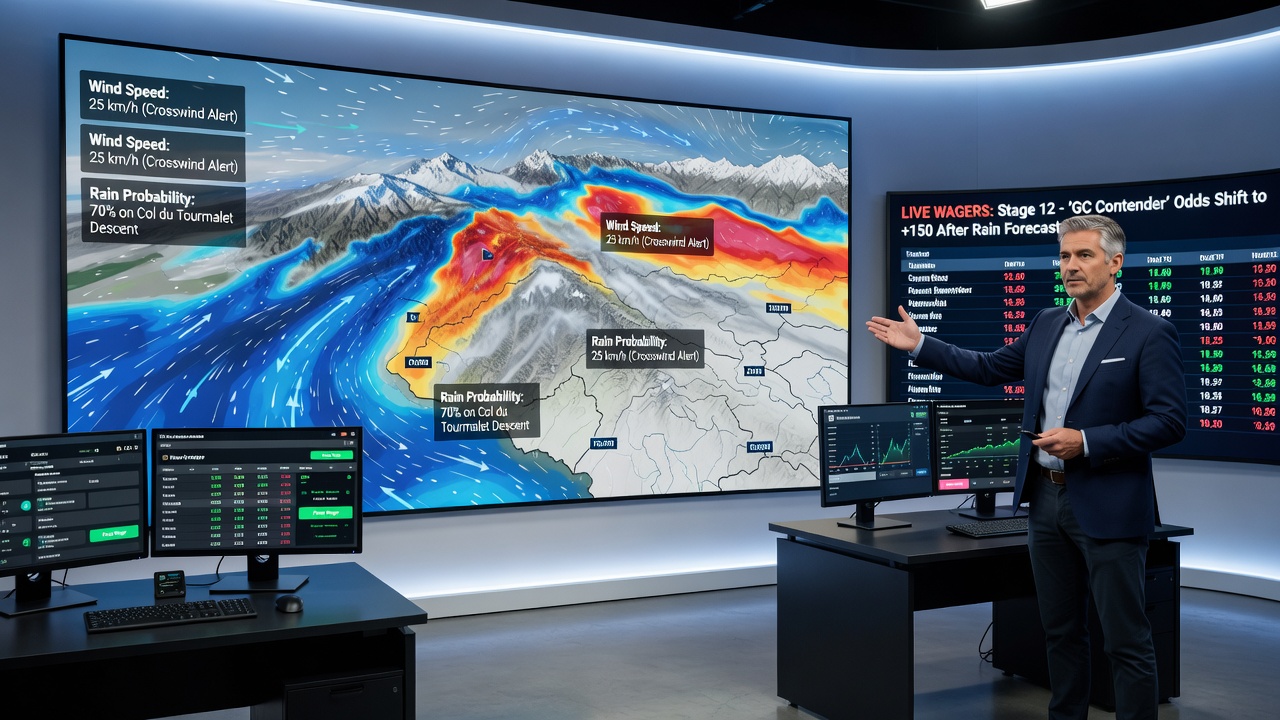
Forecast Integration: How Meteorologists' Reports Guide Live Wagers on Cycling Grand Tours
Weather conditions shape outcomes across cycling Grand Tours such as the Tour de France, Giro d'Italia and Vuelta a España, where meteorologists' reports feed directly into live wagering platforms. Forecasts covering wind speed, precipitation, temperature and humidity allow traders to adjust positions on stage winners, time gaps and overall classifications as events unfold in real time.
Weather Variables That Alter Race Dynamics
Strong crosswinds can split the peloton into echelons and create selection opportunities for teams with strong riders, while sudden rain increases crash risks and favors cautious descenders. High temperatures accelerate dehydration and fatigue, prompting teams to conserve energy early in stages, and data from past editions shows that stages exceeding 35 degrees Celsius often produce slower average speeds and larger time gaps at the finish. Observers note that forecasters deliver hourly updates during races, which traders monitor alongside timing splits and team radio reports to recalibrate live odds.
Meteorological Data Sources and Delivery
National weather services and specialized sports meteorology teams supply the reports that reach team directors and betting markets simultaneously. The National Oceanic and Atmospheric Administration provides high-resolution models for European races, while regional services in Italy and Spain add localized radar and wind profiling. These inputs reach trading desks through dedicated feeds that combine forecast grids with live sensor readings from race vehicles, enabling rapid assessment of whether a breakaway group will survive a forecasted headwind section or whether a late climb will see temperatures drop enough to affect recovery rates.
Integration Into Live Exchange Markets
Live wagering on cycling exchanges responds quickly to forecast revisions because weather changes can shift probabilities for individual riders and teams within minutes. Traders watch for updates that predict tailwinds on valley roads or thunderstorms on mountain passes, then adjust stakes on next-kilometer leader markets or stage win contracts. When a forecast shifts from dry to wet conditions two hours before a decisive mountain stage, volume typically increases on riders known for wet-weather handling, while positions on pure climbers may soften as teams alter pacing strategies. Research indicates that such adjustments occur most frequently during the third week of Grand Tours when cumulative fatigue amplifies the effect of any environmental stressor.
Stage-Specific Forecast Applications
Flat stages with crosswind potential attract attention to team time-trial specialists and sprinters who excel in chaotic conditions, whereas time-trial stages see traders focus on temperature and wind direction forecasts that affect aerodynamic setups. Mountain stages require precise timing of cloud cover and precipitation because sudden rain on descents can neutralize time gaps built on climbs. During the 2025 Vuelta a España, forecasters predicted a sharp temperature drop on the Angliru ascent that prompted teams to carry extra clothing layers, an adjustment reflected in live market movements as traders reassessed recovery times for riders who had already expended energy earlier in the stage.
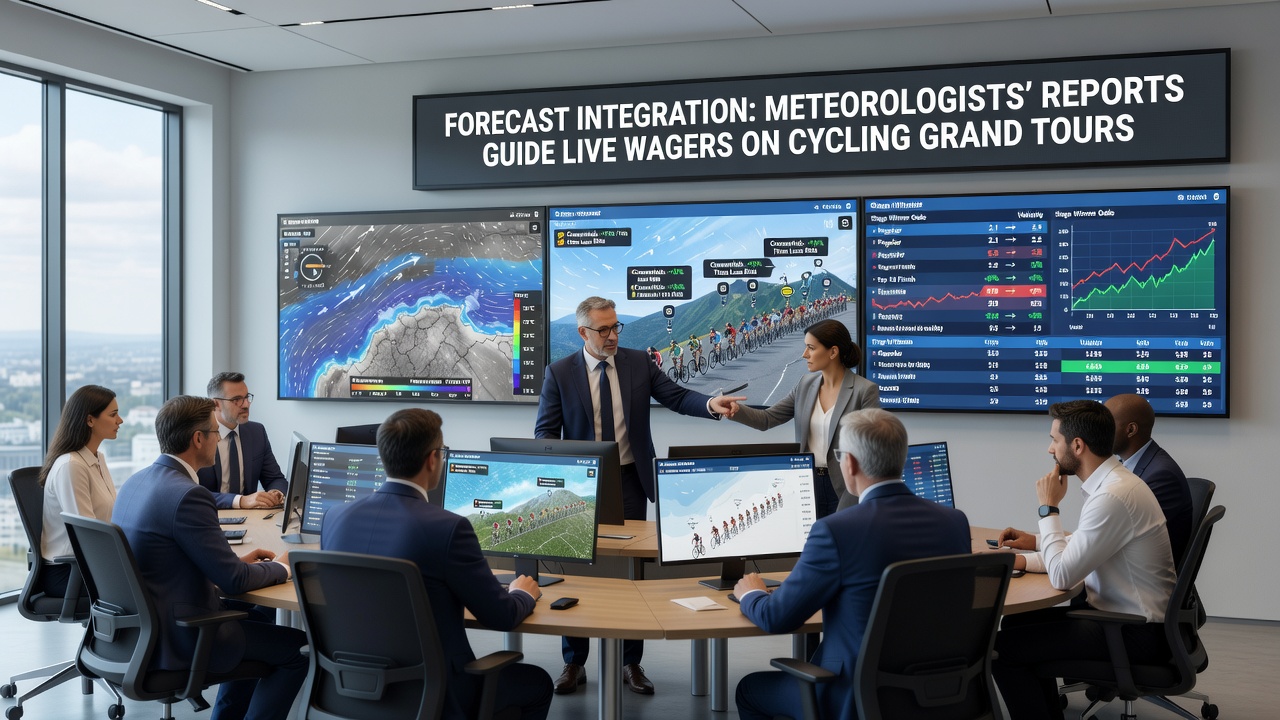
July 2026 brings the Tour de France start in Barcelona followed by early mountain stages in the Pyrenees, where forecasters anticipate variable afternoon thunderstorms that historically disrupt large groups and reward aggressive solo efforts. Traders preparing for those stages examine ensemble model outputs that show probability ranges for rainfall totals and wind gusts, then build positions accordingly across multiple micro-markets that cover intermediate sprints, king-of-the-mountains points and stage victory.
Team and Trader Response Patterns
Team staff incorporate meteorological briefings into pre-stage meetings, and the resulting tactical decisions surface quickly in exchange liquidity. When a forecast warns of strong westerly winds on the exposed plains of northern France, squads with powerful lead-out trains often commit extra domestiques to early breakaways, a pattern that prompts traders to move volume toward those teams' protected riders. Data from multiple Grand Tour editions reveals that stages with forecast wind speeds above 40 km/h produce measurably larger winning margins, a factor that traders factor into spread calculations on live leaderboards.
Forecast Accuracy and Market Adjustments
Forecast skill has improved with higher-resolution models and more frequent updates, yet residual uncertainty remains highest in convective weather regimes common during summer Grand Tours. When models diverge on the timing of a cold front crossing the Alps, traders widen spreads on mountain stage outcomes until radar confirmation arrives. According to reports from the World Meteorological Organization, forecast accuracy for 24-hour precipitation totals now exceeds 85 percent in Western Europe, yet wind direction errors of even 20 degrees can still alter echelon formation and therefore live market pricing.
Conclusion
Meteorologists' reports supply structured inputs that cycling traders integrate with timing data, team announcements and historical performance records to manage positions across live exchange markets. As Grand Tours continue through July 2026 and beyond, the volume and precision of these forecasts will remain central to how markets price evolving race conditions, with updates arriving hourly and sometimes minute-by-minute during critical stages.