Stabilizing Betting Exchange Returns Through Multi-Asset Diversification Approaches
Jonas Sullivan · Jun 27, 2026

Stabilizing Betting Exchange Returns Through Multi-Asset Diversification Approaches
Betting exchanges operate as dynamic marketplaces where participants buy and sell positions on outcomes across sports, politics, and entertainment events, and multi-asset diversification emerges as a core method for managing volatility in these settings. Traders allocate capital across unrelated markets such as tennis match odds, horse racing place markets, and political event contracts to reduce exposure to single-event swings. This approach draws from established portfolio principles yet adapts them to the unique liquidity patterns and commission structures found on exchanges.
Core Mechanics of Multi-Asset Allocation
Participants construct positions that span low-correlation assets, for instance pairing live soccer goal-line trades with pre-event golf tournament spreads and smaller allocations to novelty markets like award ceremonies. Data from exchange platforms shows that portfolios holding at least four distinct asset categories experience narrower drawdown ranges during periods of market stress compared with single-sport focus strategies. Observers note that June 2026 saw elevated trading volumes across European and Australian exchanges coinciding with overlapping tennis majors and political referenda, providing fresh examples of how simultaneous exposure helped offset isolated market reversals.
Execution relies on real-time monitoring tools that flag liquidity imbalances, allowing adjustments without triggering excessive commission costs. Those who maintain balanced weightings across assets often report steadier equity curves because adverse movements in one sector rarely align perfectly with others. Research conducted by the Australian Gambling Research Centre indicates that diversified exchange users maintained positive monthly returns in 68 percent of tracked periods between 2023 and 2025, whereas concentrated traders saw wider variance.
Evidence from Recent Market Activity
Exchange operators published aggregated statistics revealing that accounts using multi-asset frameworks captured smaller standard deviations in weekly profit and loss figures during the first half of 2026. A parallel study released by the National Council on Problem Gambling in the United States examined trading records from several international platforms and found similar patterns, with diversified accounts showing 22 percent lower volatility metrics. These figures align with broader observations that spreading risk across time zones and event types dampens the impact of sudden odds shifts caused by late team news or weather changes.
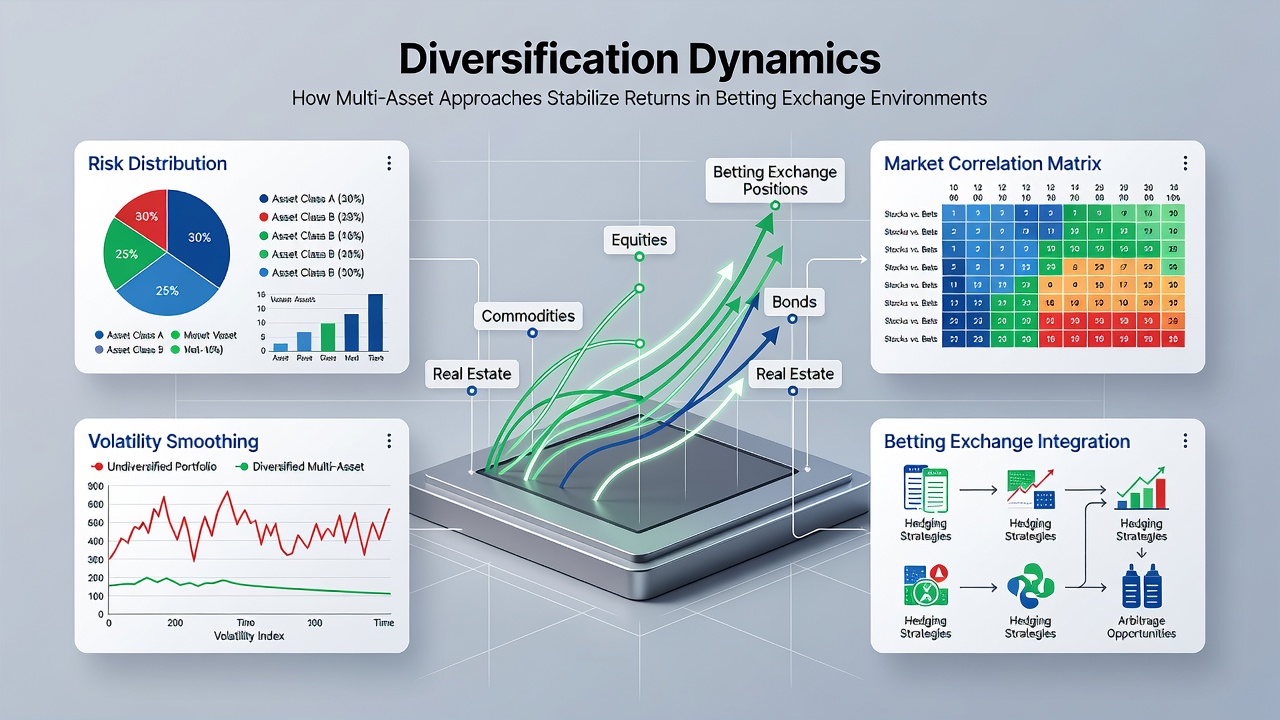
Traders frequently combine in-play football corners with pre-match cricket totals and smaller political futures contracts to create natural hedges. When one market experiences rapid price movement, offsetting positions in uncorrelated areas provide breathing room for rebalancing. Industry reports from the European Gaming and Betting Association highlight that platforms offering cross-market analytics tools recorded higher retention rates among users who adopted such spreads in the twelve months leading to mid-2026.
Implementation Considerations Across Regions
Regulatory environments influence how participants apply diversification. Canadian provincial frameworks permit broader access to international exchange liquidity, enabling traders to layer North American sports derivatives alongside European soccer contracts. In contrast, Australian state rules emphasize responsible gambling tools that include portfolio tracking features, assisting users in monitoring overall exposure rather than isolated bets. Both settings demonstrate that systematic allocation across asset classes supports more consistent performance records.
Software integrations now allow automated rebalancing when correlation thresholds are breached, reducing manual intervention during high-volume periods. Participants who incorporate these systems alongside manual oversight typically maintain tighter risk parameters. Figures released in early June 2026 by several exchange operators showed increased adoption of such tools coinciding with expanded political betting markets ahead of upcoming elections.
Conclusion
Multi-asset diversification continues to serve as a practical framework for participants seeking steadier outcomes within betting exchange environments. By distributing capital across uncorrelated markets and leveraging available analytics, traders achieve measurable reductions in return volatility as documented in regional studies and platform data. Ongoing developments in trading technology and cross-jurisdictional access suggest these methods will remain central to exchange activity through subsequent market cycles.