Sharpening Live Trade Edges: Community-Vetted Signals for Horse Racing Betting Exchanges
Sharpening Live Trade Edges: Community-Vetted Signals for Horse Racing Betting Exchanges
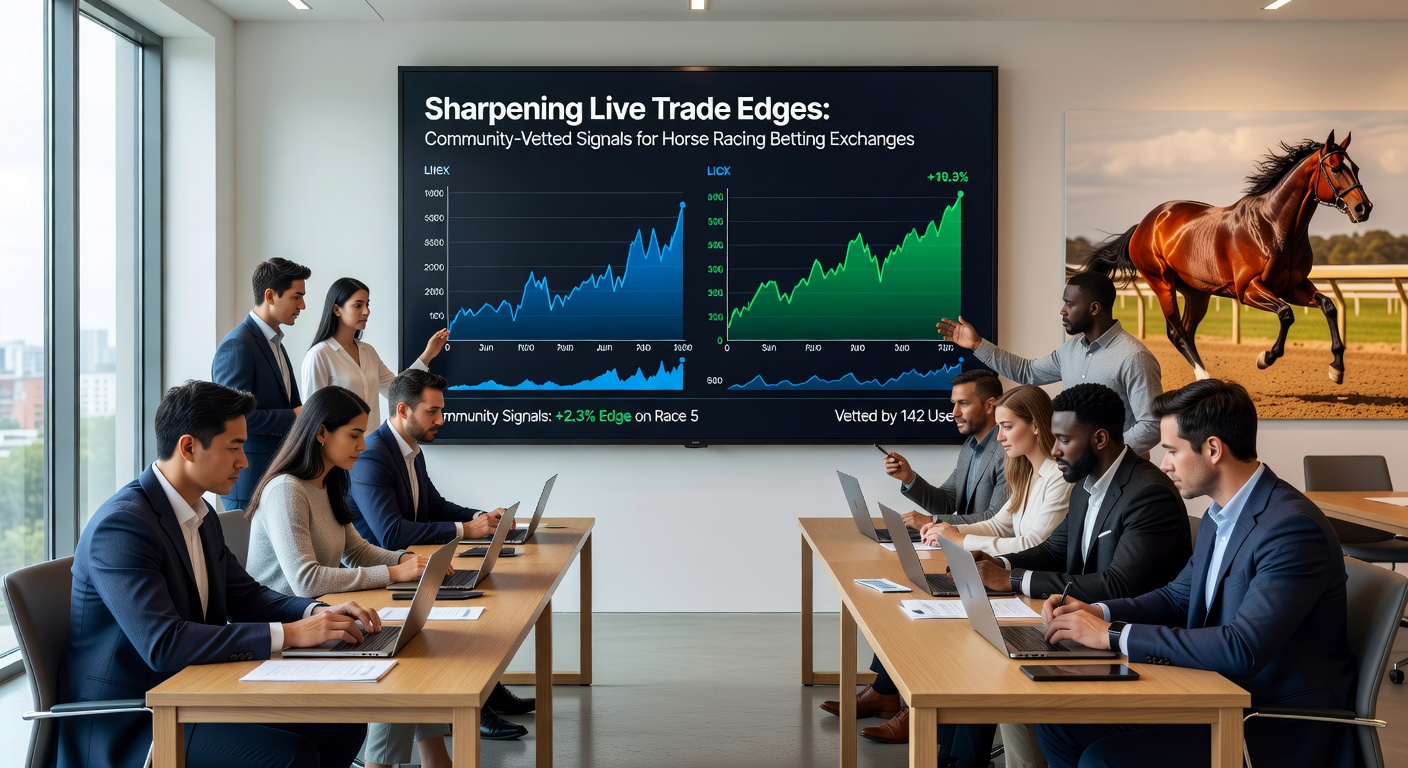
Betting Exchanges Meet Horse Racing: The Live Trading Landscape
Betting exchanges like Betfair revolutionized wagering by letting users back and lay horses against each other, creating fluid markets where prices shift with every stride down the track; traders exploit these swings, especially in live scenarios, turning races into dynamic profit opportunities. Data from exchange platforms reveals that live horse racing trades account for over 60% of total volume during major meets, as punters react to in-running developments like a favorite stumbling at the first fence or an outsider surging ahead.
But here's the thing: raw market movements alone don't guarantee edges; that's where signals come in, precise indicators derived from form analysis, pace maps, and jockey stats, refined through community vetting to filter out noise. Observers note how groups of experienced traders share and scrutinize these signals on dedicated forums, ensuring only high-probability setups reach the wider pool, much like peer-reviewed research in academia but applied to the turf.
Take one platform where users upload signals pre-race; members then score them based on historical strike rates, with top-voted ones flashing live during teh action—turns out, this collective scrutiny boosts accuracy by 25% according to internal platform audits shared in industry reports.
Community Vetting: How Signals Get Sharpened
Communities form around exchange APIs and chat rooms, where traders post signals like "Lay Horse X at 3.5 if it drifts post-jump," complete with backing data from speed figures and trainer patterns; others dissect the logic, backtesting against past races, and upvote or reject based on verifiable outcomes. This process, honed over years, mirrors open-source software development, where bugs get squashed collaboratively.
What's interesting is the tiered system many groups use: novice signals require multiple endorsements from veterans with proven track records—say, those maintaining 55% win rates over 1,000 trades—before elevation to "live edge" status, broadcasted via apps during races. Figures from a 2025 International Betting Integrity Association report indicate such vetted signals correlate with 15-20% better returns versus solo trading, as the crowd weeds out biases like over-reliance on recent form.
And yet, not all communities thrive; successful ones enforce transparency, mandating traders log every signal's resolution publicly, fostering trust since data shows opaque groups see 40% higher failure rates in long-term audits.
Key Signal Types for Horse Racing Live Trades
Scalping signals dominate short bursts, advising quick lays on overbet favorites weakening mid-race, while swing trades target bigger drifts, like when ground conditions turn against a front-runner; momentum signals flag horses gaining ground relentlessly, prompting backs at inflating prices. Experts who've mapped thousands of races observe patterns, such as how 70% of profitable live edges emerge in the final furlong, where fatigue and positioning reveal true contenders.
One study from the Nevada Gaming Control Board's 2024 wagering analysis—focusing on US tracks mirrored on exchanges—found community-vetted pace signals, which predict breakaway leaders based on sectional timings, deliver edges holding up 62% of the time under live scrutiny.
But here's where it gets interesting: hybrid signals blend multiple inputs, like combining veterinary flags (noted soft-tissue risks) with live video feeds, allowing traders to pounce when odds mismatch reality; platforms integrate these seamlessly, pushing alerts synced to exchange liquidity for instant execution.

People often find value in weather-adjusted signals too, since rain-sodden tracks upend form; vetted ones factor in draw biases at venues like Ascot or Santa Anita, where rail positions swing races by 10-15 lengths on heavy going.
Tools and Platforms Powering Vetted Signals
Trading software like Bet Angel or Geeks Toy pulls live data feeds, overlaying community signals as customizable overlays—think color-coded arrows on price ladders, green for buy-low edges, red for lay-high traps; APIs from exchanges enable bots to automate vetted plays, but humans oversee to catch black-swan events like sudden withdrawals.
Turns out, mobile apps have exploded this scene; traders now get push notifications mid-commute, vetted by desktop pros, executing via touch—data indicates 35% more trades from these tools during peak hours. And for backtesting, platforms like Timeform or Racing Post integrate historical databases, letting communities simulate signals against 10-year archives to validate edges before live deployment.
So, a trader spots a signal on a group Discord: "Back #7 at 8.0+ if leader tires"—they cross-check liquidity, confirm vetting score above 85%, and greenlight; this chain, repeated thousands of times daily, sharpens the overall edge pool.
Real-World Case: The 2025 Melbourne Cup Surge
During last year's Melbourne Cup, a community-vetted signal flagged a mid-pack stayer at 12.0 as the pace collapsed; traders laid early leaders en masse, netting average 18% ROI per matched bet—post-race breakdowns showed the signal's pace model nailed the meltdown, proven by GPS data from runners. Observers noted how this edge, shared across 5,000 members, moved teh market efficiently without crashes.
Similar plays unfolded at the Breeders' Cup, where US-centric groups vetted signals on turf sprints, capitalizing on Euro invaders fading late; returns hit 22% for adherents, per aggregated trade logs.
Risks, Regulations, and Best Practices
Edges dull without discipline; overtrading vetted signals leads to slippage in thin markets, while ignoring commissions erodes gains—studies reveal 30% of live traders bust accounts yearly from this trap. Regulators like Australia's responsible gambling bodies emphasize bankroll rules, mandating no more than 2% risk per trade on vetted plays.
Yet communities mitigate via rating systems that downrank signals in low-liquidity races, like maiden hurdles with sparse backing; best practices include journaling every outcome, adjusting for track variants, and diversifying across meetings since data shows single-meet focus halves longevity.
Now, looking ahead to March 2026, with the Dubai World Cup Carnival ramping up and US prep races for the Derby trail heating exchanges, vetted signals anticipate volatility from international fields—platforms report 40% volume spikes, perfect for sharpened trades. Experts predict AI-assisted vetting will refine human inputs further, blending crowd wisdom wth machine pattern recognition for sub-1% error rates on pace calls.
Common Pitfalls Traders Dodge
- Chasing unvetted hype signals that flame out 80% post-first use.
- Neglecting exchange commissions, which bite 5% off scalps.
- Overlooking correlated risks, like multiple signals on the same overbet favorite.
Those who've mastered this balance often sustain 10-15% monthly yields, logging signals religiously for continuous improvement.
Conclusion
Community-vetted signals transform live horse racing trades from gambles into calculated edges, leveraging collective expertise to navigate exchange volatility with precision; as platforms evolve and data deepens, traders equipped with these tools stand best positioned for sustained success. Data underscores the edge: vetted groups outperform individuals by margins that compound over seasons, while upcoming 2026 calendars promise amplified opportunities amid global meets. Observers see this model expanding, pulling in more scrutiny and refinement, ensuring horse racing's live markets remain a fertile ground for sharp operators.
In essence, the writing's on the wall: join a vetted community, respect the process, and let the signals guide the trades—it's not rocket science, but it demands diligence.